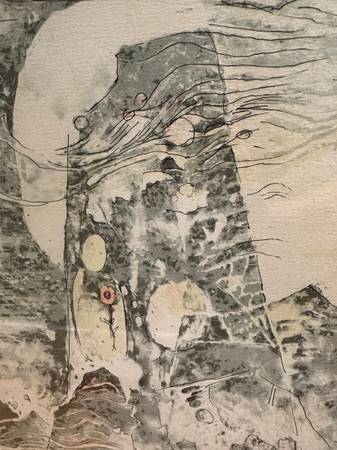
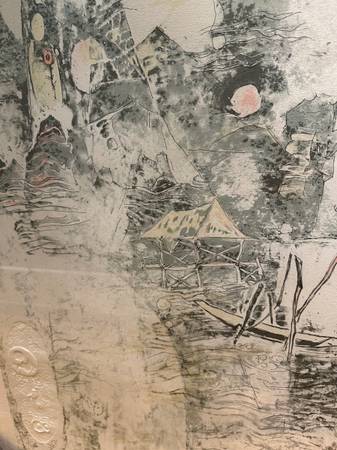
Lebadang (also known as Hoi) was a Vietnamese-born French artist known for his unique blend of Eastern and Western cultural and philosophical influences.
Biography
Early Life: Born Le Ba Dang in 1921 in Bich-La-Dong, a village in Quang-Tri Province, Vietnam, Lebadang showed an early interest in art.
Move to France: In 1939, he emigrated to France to pursue a career in art.
World War II: He was captured and held in a prison camp while serving in the French Resistance. After his release, he was able to study painting and sculpture at the École des Beaux-Arts in Toulouse.
Career: By 1950, Lebadang's work was recognized by the Paris art community. His first one-man show was held in Paris that same year, leading to exhibitions throughout France and Germany. In 1966, the Cincinnati Art Museum held the first solo exhibition of his paintings in the United States, which helped him gain prominence in the American market.
Death: He died in Paris, France, in 2015.
Artistic Style and Media
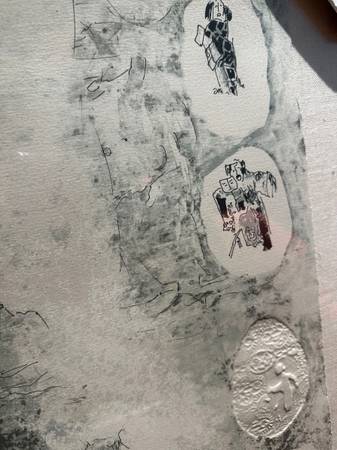
Lebadang was a versatile artist who worked in a variety of media, including painting, watercolor, sculpture, and graphic works. He was particularly known for his printmaking, favoring techniques like etching, lithography, and serigraphy.
Several museums and foundations hold works by Lebadang, including:
Lebadang Memory Space Art Museum in Hue, Vietnam, which was founded to honor and exhibit his masterpieces.
Cincinnati Art Museum in Ohio, USA.
Phoenix Art Museum in Arizona, USA.
Rockefeller Collection in New York, USA.
Columbia Art Institute in the USA.
Lund University Museum in Sweden.
Cernuschi Museum in Paris, France, which received a donation of 20 of his works.