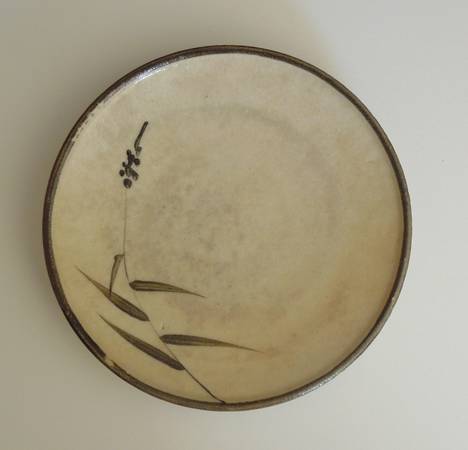
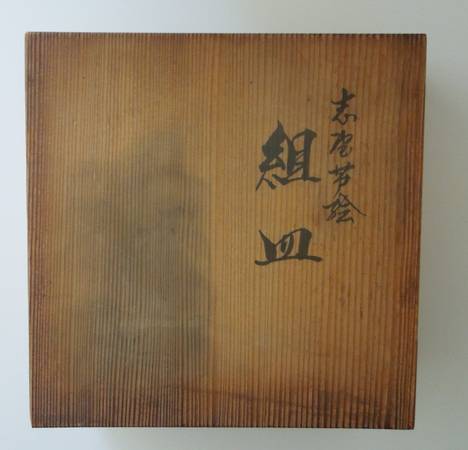
The large characters writing on the box say group of plates, in a japanese set there are five , i.e. five plates. The small characters say e -shino plant—e means picture, so picture of a plant is brushed on each plate . The plates are in very good shape, especially for their use and one has some minor some blotchy discoloration to it.
Shino originated in the Moyoyama period —considered the period of GREAT Japanese design and craft— They are good examples of what makes Shino great, simple, minimal and the craftsmanship is the story they have to tell, Yanagi Soetsu’s story of The Unknown Craftsman.
I purchased these from Robert Yellin over 20 years ago, he sent them to me from Japan. He thought they were antique or close to it then and possibly from a road house. From their condition an what is written on the box —on most newer pottery, maybe 1930s and on the name of the kiln would been written on the box and since 1960s the signiture of the potter would be on the box. They would have been wood kiln fired. My wife is from Seto/Mino area in Aichi Prefecture which is where Shino kilns originated and still are active .
I have included photos of the face of each place but include only two photos of the back, basically they are the same as the plain one and only one had a few brown marks .
Shino was one of the early kilns of Japanese Folk pottery and its been active for hundreds of years. Japanese folk pottery is differentiated from Kyoto style pottery which historically were made tor the emperor and upper class in Kyoto, are often more decorative, and strongly influenced by Chinese Porcelain while the folk kilns developed throughout the other parts of Japan with their own history of vitrification (making pots which will hold liquid) and local clays and many unique styles.